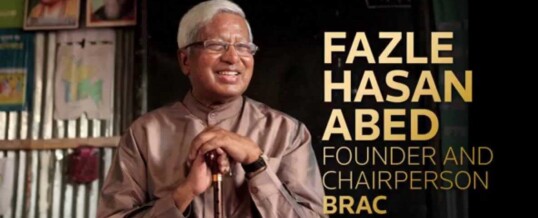
ED: May The Games of Architect Intelligence (AI) be with you & Mother Earth's 8 billion beings & 1BnG & HAI .. breaking sept 2023 one of my fav 5 hours spent at university!!
.chris.macrae@yahoo.co.uk RIGHT OLD MESS
EE: Back in dad's teenage diary as navigator Allied Bomber Command Burma, a day headed ROM meant a friend's flight went missing. In 2023 ROM is politest term we can use for failure to help youth celebrate 73 years of research with von neumann on only good tech can save our species, and 36 years of world class brands architecture research round biggest decison makers started 1988 when dad restored from The Economist: on how bad media can destroy millennials futures. From the last articles we influenced in The Economist Trust has been the exponentially missing metric. Thanks to a chat with Von Neumann's daughter (who's advances for humanity would her dad have trusted most 2025-1950? EconomistDiary.com is launching a game Architect of Intelligence. Dare you play the most urgent cooperation game in sustainability goals hi-tech-trust-touch world?
ED dedication : To Architects Fazle Abed & Steve Jobs -who convened silicon valley's 65 birthday to Abed in 2001 giving 7 years of design foresight to why mobile digital network not seen in his 1984 launch of PC networking
INDUSTRIAL REV 260th GAMES-cards of sdg-gen
..
Uni2 :FFL*JOBS*DHgoog
Guterres*JYK*JFK
welcome to AIsdgs.com where media designers help take down fake media wherever its wasting 8 billion peoples time

you may want to join economist dairy in 1951 when The Economist sub-ed  NM was seconded to NYPeinceton for year to listen to John Von Neumann design the number 1 journalism-for-humans quiz, Architecture of Intelligence (AI): it was agreed the most valuable scoop earthlings may e-vision = what goods can humans unite wherever celebrating early access to 100 times more tech per decade? - eg a billion times more 2015=1955

or back from future of 80 years of 2025report: join bard-solar express route 1843 to 2023-4-5: 1843 EconomistDiary.com under 30 queen victoria accepts Economist founder James Wilson help to start mapping commonwealth trading maps replacing britannia ruling all of asia waves round global market of englishmen's tea ; in 1859 victoria charters bank for Wilson to go design financial service for quarter of humans on india's subcontinent; after year 1 celebrations by most of the peopels, james dies of diarhea; it takes 112 years before former shell oil ceo educational intelligence empowers womens lesson plans round oral rehydration, 10 community business of goal 2 2 food, goal 3 health and 90% of the peoples trust in a regional bank for female generations to build nation

SDG 5  4  3   2  1  0 welcome to Asia and the top 5 sdgoals 50 years search scaling the most exciting collaborations women-led communities empower
ED soon after 2010 death of Von Neumann's first journalist of Architect Intelligence The Japan Ambassador to bangladesh hosted 2 brainstorming sessions- since 2001 Steve Jobs and Fazle Abed had united their support of net generations futures : would a moon of the top 30 cooperations visioned by 1billiongirls help bridge human intel until Steve Jobs gift of a university in phone (iphone 2007) might renew interest in man made engines blending human intelligence ... EconomistLearning.com from 2009 stanford's fei-fei li began the new entrereneurial revolution of pretraining computer visiosn (in about 10 different ways from science games deepmind, to 1000language games LLM , to object recognition of autonomous cars are ever needed, to nlp to literature veviews in real time of very covid publication to 2019 stanford hai inviting every human discipline grads spend time on to HAI ,,,,as pretraining of humans rose to 2015 hopes were that high that it was time to declare 17 cooperation dev goals and roadmapping of UN2 comprised of dynamic subystems of above zero-sum human networking. Bangladesh as deepest place branding of SDG5 celebrates being 52 years young in 2023 the 265th year of smithian moral sentiments at Abed's Alma mater Glasgow Universiity. Supporting hi-tech hi-trust Asian place winners include: singapore 2023; hong kong (22.1 Place winners 22.22022 ... Thailand2021 ..) . Abed was not just a world class civil engineer; he dedicated half a century until his death in December 2019 as servant leader. Aligned by HG Wells bon mots: civilisation is a race between education and catastrophe, Abed Bhai preferred to be seen as host of microeducationsummit not financiers summits: his gravitation purpose of 30 women empowered cooperations that of united refugees, villagers and civil societies in ENDING POVERTY. Fortunately for the worlds poorest new nation Bangaldesh 1971- Abed had networks like no other community leader. HIs friends' coop roadmapping reached out to intel vitalised by at least a billion village mothers in tropical inland asia where, a third of infants were dying of diarrhea before Abed's person to person networking became the best news ever chatted. Fro mid 1950s studies in Glasgow he spent nearly 13 years growing to be Royal Dutch Shell Oil Company's regional CEO. So his lifetime searches uniquely capitalised on what UK and Dutch Royal Societies (soon Japan Royals too) knew how to help end the poverty their colonial era had up to 1945 trapped the majority of humans world trade in. Simply put most Asian coastal belts link national borders defined by what these < a href="http://www.kc3.dev">3 kingdoms designed in to trading barriers over nearly half millennium. And which had made the English language that of world class engineering (digital age as well as pre-digital) So by 1970s these nations royal societies (including londons arts green-geographical, medicinie, science, architects ...) were happy that a grounded movement could link them into what they didnt fully know culturally or consciously. From 1970 on Abed linked in global village mapping like no one else - through these relationships and by designing business microfrachises not charity wherever possible for village women to own. To study with abed alumni is to join in the world's most cooperative empowering women movements for good as well as of childrens development.

Sunday, June 6, 2021

Welcome, introductions and recap from Webinar #1  Global RCE Service Centre  RCE Scotland 08:10 'The future we want: setting the scene'  Input from young people  RCE Scotland 08:20 'Introducing the Roadmap for the RCE Community 2021-2030'  Global RCE Service Centre representatives will introduce the new RCE Roadmap  This will be followed by a Q&A session with the presenter(s).  Global RCE Service Centre 08:40 'Taking Action through Learning: Climate Change and the UNESCO ESD 2030 Roadmap #1: Stimulus presentations  5 x RCE Representatives will share a short 5-minute presentation on activity in their RCE that links action on climate change with one of the Five Themes in the UNESCO ESD 2030 Roadmap: 1. Advancing policy 2. Transforming learning environments 3. Building capacities of educators 4. Empowering & mobilising youth 5. Accelerating local level actions  Global RCE Service Centre  RCE Representatives 09:05 Break  RCE Scotland 09:15 'Taking Action through Learning: Climate Change and the RCEs’: Breakout sessions  All delegates 09:45 'Taking Action through Learning: Climate Change and the RCEs': Plenary session  RCE Scotland 09:55 'Looking forward: the 2021 Global RCE Conference'  RCE Scotland 10:00 Close  Global RCE Service Centre  RCE Scotland

b. Pre-webinar briefings & reading
i. Further reading:
ii. Examples of RCE activity linking climate change and the Priority Action Areas of the UNESCO ESD 2030 Roadmap:

1. Advancing policy:
2. Transforming learning environments:
3. Building capacities of educators:
4. Empowering and mobilising youth:
5. Accelerating local-level action:


Friday, June 4, 2021


GAMES on! #Aiforgood 1 ... 17...
-women empowered industrial revolution 4 3 2 1 0


=============================
special thanks to sir fazle and 1billiongirls for 25 of the most exciting playing pieces of the games of the sdg generation.
..HEALTH

H1 Oral rehydrate + nation grants eg vaccines

H2 last mile microfranchise non-prescription drugs plus advice – 300 families per pra-healt

H3 community support – prevent infant stuntiong first 1000days; mothers pre-natal care

H4 tb

H5 WASH+

FINANCE

F0 Aid transformation -80% microfranchises;20% direct know grants: 1 village 100kvillge national enterprises- global aid transformation

F1 Ultra graduation grant -10% extreme poor- 1 millin by 500$ bangladesh to 2017 1 million elsewhere- after featuring nobel economics 2019 expanding from 8 to possibly 46 countries

F2 microfinance village microfranchIses ? annual loans

F3 city bank -2nd generation/youth/smes/ declared assets

F4 cashless banking bkas – 1billion unbanked

F5 remittances & international

F6 nation leasing businesses in trust

EDUCATE

E5 brac/abed uni coalition futures

E4 skills bridge – to college, apprentice worl

E3 early adolescent peer clubs – skills, self-health

E2 primary

E1 pre-primary
....FOOD-Agri

A1 rice science

A2 other veggie science

A3 poultry

A4 dairy

A5 fisheries

A6 cash crops eg tea, silk, forrestry

A7 national enterprises inc cold storage

....

THE SEARCH FOR 50 UNIVERSITY COALITION OF WOMENS SDG GENERATION
chris.macrae@yahoo.co.uk
Through the 2010s as i was privileged to witness with 15 visits to Bangladesh ...
Ambassadors in Dhaka received the most exciting invitation imaginable- how could a university link in from every country's students to be the worldwide scholarship legacy of fazle abed. In countries with big populations abed went further- you will need at least one free university valuing youth's race to unite the first sdg generation per 50 million people -that might be 10 in the world of english mother tongues but 25 each in chinese and indian dialects. And please will they love youth lives matter as much as the poorest bangladesh village mother. And how urgently they will need help to leapfrog with tech partnerships into every most extreme sdg challenge. And culturally dare I ask in every community they value last mile servant leadership - the social actions way ahead; celebrate the respectful communications of franciscan followers of paulo freire's script in pedagogy of the oppressed.

4 related surveys:
1 who's joining osun and how are they both deepening and diversifying livelihood curriculum of osun alumni
2 survey of surveys of educators who value youth most as the sd generation
3 updating compendium of humanising ai- the data communities need to deeply value so that life blossoms out of every place/space on planet
4 multi-hemisphere new uni network evolving as largest ngo gravitated economy of 2020s sustainability decade - from the south understanding who helped the largest ngo partnership : abed uni*brac uni*bkash*brac); from the north connections of bard soros central euro u open society; from the far west- partners of america's most radical tech university model for ending poverty arizona state - with each next leap as a lab for solutions those facing the most extreme sdg challenges needed the human race to innovate and openly scale
-together with heritage resources providing insights into the uniquely collaboratively connections of osun alumni starting with bard out of new york state- founder john bard mid 19th century; developed during the 5g 4g 3g 2g 1g decades 2020s-1980 leon botstein and friends
george soros announced world economic forum 2020 boost to osun coalition of billion dollars of grants -as well as 50 institutes first eligible to map this worldwide coalition for the sdg generation
although there are some venerable institutions listed at osun- there's a triangular diversity coming from:
bard founded by a new york family (a little before stanford was launched for similar reasons on west coast) who had lost their teen son to disease and therefore wanted to unite medically smart studies at columbia university, ny university and bard's ny state campus- over 45 years this alumni network has been orchestrated by musicinl leon botstein- we reproduce below a 1980s bard observer as it provides one radical indicator of what bard intel shares with the world; it turn out that two influential families live between bard at annandale on the hudson and new yourk city - the roosevelts and george soros both huge supportes of youth-values education; soros founded his oown central european university over 30 years ago- whilst funding jim kim and paul farmers grassroots research on ending tuberculosis the discovery was made that over a billion asian women had networked to end tiberculosis in days when they had no access to electricity grids; the educator in the middle of this had built village women netwoking ot of south asia for 35 years but now as the 21st century was blossoming he wanted his legacy to integrate a coalition of sdg universities the abed-brac uni system - so we have a first triangularition of 50 colleges from new york state to ceu in budapest/vieena- to the asian continent hubbed meta-hubbed by village women out of dhaka bangladesh; of course we can link in other triangles - eg bard, ashesi future of african education out of ghana, arizona state the number 1 end poverty tech university according to higher ed rankings; orr look again at the first 50 colleges open sourcing curicula and find you gateway in
....
..

pdf of whole newsletter bard 1988


GAMES on! #Aiforgood 1 ... 17...
-women empowered industrial revolution 4 3 2 1 0


=============================
special thanks to sir fazle and 1billiongirls for 25 of the most exciting playing pieces of the games of the sdg generation.
..HEALTH

H1 Oral rehydrate + nation grants eg vaccines

H2 last mile microfranchise non-prescription drugs plus advice – 300 families per pra-healt

H3 community support – prevent infant stuntiong first 1000days; mothers pre-natal care

H4 tb

H5 WASH+

FINANCE

F0 Aid transformation -80% microfranchises;20% direct know grants: 1 village 100kvillge national enterprises- global aid transformation

F1 Ultra graduation grant -10% extreme poor- 1 millin by 500$ bangladesh to 2017 1 million elsewhere- after featuring nobel economics 2019 expanding from 8 to possibly 46 countries

F2 microfinance village microfranchIses ? annual loans

F3 city bank -2nd generation/youth/smes/ declared assets

F4 cashless banking bkas – 1billion unbanked

F5 remittances & international

F6 nation leasing businesses in trust

EDUCATE

E5 brac/abed uni coalition futures

E4 skills bridge – to college, apprentice worl

E3 early adolescent peer clubs – skills, self-health

E2 primary

E1 pre-primary
....FOOD-Agri

A1 rice science

A2 other veggie science

A3 poultry

A4 dairy

A5 fisheries

A6 cash crops eg tea, silk, forrestry

A7 national enterprises inc cold storage

....

THE SEARCH FOR 50 UNIVERSITY COALITION OF WOMENS SDG GENERATION
chris.macrae@yahoo.co.uk
Through the 2010s as i was privileged to witness with 15 visits to Bangladesh ...
Ambassadors in Dhaka received the most exciting invitation imaginable- how could a university link in from every country's students to be the worldwide scholarship legacy of fazle abed. In countries with big populations abed went further- you will need at least one free university valuing youth's race to unite the first sdg generation per 50 million people -that might be 10 in the world of english mother tongues but 25 each in chinese and indian dialects. And please will they love youth lives matter as much as the poorest bangladesh village mother. And how urgently they will need help to leapfrog with tech partnerships into every most extreme sdg challenge. And culturally dare I ask in every community they value last mile servant leadership - the social actions way ahead; celebrate the respectful communications of franciscan followers of paulo freire's script in pedagogy of the oppressed.

4 related surveys:
1 who's joining osun and how are they both deepening and diversifying livelihood curriculum of osun alumni
2 survey of surveys of educators who value youth most as the sd generation
3 updating compendium of humanising ai- the data communities need to deeply value so that life blossoms out of every place/space on planet
4 multi-hemisphere new uni network evolving as largest ngo gravitated economy of 2020s sustainability decade - from the south understanding who helped the largest ngo partnership : abed uni*brac uni*bkash*brac); from the north connections of bard soros central euro u open society; from the far west- partners of america's most radical tech university model for ending poverty arizona state - with each next leap as a lab for solutions those facing the most extreme sdg challenges needed the human race to innovate and openly scale
-together with heritage resources providing insights into the uniquely collaboratively connections of osun alumni starting with bard out of new york state- founder john bard mid 19th century; developed during the 5g 4g 3g 2g 1g decades 2020s-1980 leon botstein and friends
george soros announced world economic forum 2020 boost to osun coalition of billion dollars of grants -as well as 50 institutes first eligible to map this worldwide coalition for the sdg generation
although there are some venerable institutions listed at osun- there's a triangular diversity coming from:
bard founded by a new york family (a little before stanford was launched for similar reasons on west coast) who had lost their teen son to disease and therefore wanted to unite medically smart studies at columbia university, ny university and bard's ny state campus- over 45 years this alumni network has been orchestrated by musicinl leon botstein- we reproduce below a 1980s bard observer as it provides one radical indicator of what bard intel shares with the world; it turn out that two influential families live between bard at annandale on the hudson and new yourk city - the roosevelts and george soros both huge supportes of youth-values education; soros founded his oown central european university over 30 years ago- whilst funding jim kim and paul farmers grassroots research on ending tuberculosis the discovery was made that over a billion asian women had networked to end tiberculosis in days when they had no access to electricity grids; the educator in the middle of this had built village women netwoking ot of south asia for 35 years but now as the 21st century was blossoming he wanted his legacy to integrate a coalition of sdg universities the abed-brac uni system - so we have a first triangularition of 50 colleges from new york state to ceu in budapest/vieena- to the asian continent hubbed meta-hubbed by village women out of dhaka bangladesh; of course we can link in other triangles - eg bard, ashesi future of african education out of ghana, arizona state the number 1 end poverty tech university according to higher ed rankings; orr look again at the first 50 colleges open sourcing curicula and find you gateway in
....
..

pdf of whole newsletter bard 1988

Monday, May 3, 2021


https://unesdoc.unesco.org/ark:/48223/pf0000374802.locale=en

x
R43210-four industrial revolutions have emerged since
1760 when 2 scots watt and smith began IR1 the age of humans and machines focusing first on machine energy/power way beyond that of horse and man-
since 1957 - thanks to legacy of john von neumann- it has been possible to map ut 5 types of economies with 2 new ones IR3, IR4 being added by alumni of von neumann;
in between IR2 -telecoms revolutions started to scale when scot alexander bell offered americans first opportunity tp scale telephones across a continent .. soon telegrams and phones were being supplemented by radio, then television - then satellite telecoms which was to mobilise personal and societal devices; whilst IR4 has accelerateds as the most valuable games human livelihoods ever played from late 2000s both with unprecedented data connecting worldwide human decision-making and by then over a billion times more computing power than had coded moon landing- while the monetary rise may focus ever more on ir4;
nonetheless sustainability's last chance in 2020s depends on integration starting from IR0-
in 2021 half a billion asian women celebrated having lifted a billion out of the most extreme poverty -under a dollar a day- it is their work that needs to be included in the way millennials understand mother earth if they are to be the first sustainability generation.
300 trillion dollars of pension funds not one cent invested in sdgswashington dc last soft power debate before covid lockdown
goal 3- market last mile health
3.1
*oral rehydration & cholera
*village door to door non-prescription plus search
*vaccination services
*tuberculosis
*WASH
*other tropical

goal 2 -last mile market human energy eg water , milk, rice, one vitamin veggie are essential to rural life
*rice
*other veggie
*dairy
*poultry
*fishery
*cash/green agriculture: tea, silk, forrestry, cold storage

goal 1 relevant village financing essential if local entrepreneurs to scale positive incomes beyond endless charity:
microfranchising models completely change aid - grants only for demonstrable capacity- bottom up trust investment
microfinance+
ultra grad- pre mf
sme citizen bank
remittances part of brac internatioal
cashless banking ppor bkashgoal 4 livelihood action learning needed at every age group -both students and teachers:
interactions between every age group primary
college
early or pre-adolescence
pre-school

the archives of fazle abed - collected by friends - have we missed a keynote lecture rsvp chris.macrae@yahoo.co.uk

community resiliency is needed both to be ready for climate challenges, legal protection eg where more powerful citizens dump waste on poorer, and so that underclasses do not exst- if any demographic is exluded from productivity sustainability is impossible to generate .................
brac began with building for 100000 refugees - 16000 homes at under$2 per home- eg village males built own homes- from then on, brac raised livelihoods of women from close to 0% to 100% -in parallel china wasa undergoing women hold up half sky revolution- consequently village women empowered to swap solutions -ultimately ending extreme poverty of billion rural people over 45 year period
barefoot lawyers
initial sanitation design pit latrines-
by building 100000 regional lab as early as 1972- brac could test service concepts -and then scale across all 60000+ villages -fast with life saving action learning eg oral rehydration, vaccines - as steadily as investment trust could scale moicrofranchieses of positive cashflow village mothers businesses- overall brac's servant leasership model scaled faster than top down goverment which at time of indeoenence had barely any tax revenue and few engineering skilled people matching abed's 10 years experience which had seen him rise as engineer to region ceo of royal dutch shell oil companyasia rising survey's from The Economist - norman macrae
7 May 1977 survey Two Billion People- Asia ..1975 Asian Pacific Century 1975-2075 1977 survey China

join the forums of friends of worlds record job's sir fazle abed abed
......as reported economist asia rising 1975-77- two uniquely asian models -belt capital roadsters and rural keynianism have sustianed rise of 70% of humans who are asian -because of western empires vast majority of people on asian continent had been left out of first industrial revolutions - not being on electricity grids they were left out of both ir1 carbon powers industrial revolution and ir2 telecoms revolution ; by 1960 japan korea south and far east islands had recovered from world war 2 - they linked in the roadster model and from 1972 bangladesh became the worlds open lab for rural keynes while from 1976 china became a rural girls networker as well as multipier of the radster model- so the purest models of how half a billion women ended extreme poverty come from bangladesh coalitions but the biggest rise come from how china multiplied both models on a contiental scale
latest news from 50 college coalition for sdgs
https://opensocietyuniversitynetwork.org/ events next past -access learning curves of educational revolutionaries ABC - Abed, Botstein, Crow ... Soros what do sdg-youth want to learn from & celebrate actionably with new york & UN & nature's borderless goals for human wellbeing? tours 10......
,close encounters:
of healthy kind, of servant leader kind, of food security, of education kind, of credit kind, of solar kind, of other machine intel kind

afore ye go global with tech, value 4 humansAI system gravities
bullseye poverty; red community/family-sustaining goals 2-6
blue tradefor sdgs channel goals 7-12; 13-16 green revolution - not seen humansai : triangularise collaboration exponentials public, private by youth


edu as if all teens lives matter- see maps brooklyn, rest ny suburbs, rest ny state
health beyond covid with cuomohealth with bloomberg-hopkinshealth with james grant global school of vaccines and health
young scholars of us's number 1 monetary economist and philanthropist soros- economist for sdgs, global performing arts & fashions, multilingual youth ambassadors, twin city special vienna, dhaka:women's world's number 1 ngo coalition, berlin, palestine
global investment funds - soros:global board- deep data for every society and climate: bloomberg, blackstone, schwarzman
action-learning networks of ban ki-moon, jim kim, & antonio guterres
- schwab links unga with 5 hubs of industrial rev 4 - san fran, tokyo, beijing delhi, geneva as well as world economics davos winter and world innovation champions china summer and 400 global youth shapers hubsfall priority young journalism briefs- chennai bay and carribean for america's most powerful woman

Thursday, April 29, 2021


March, we continued to make progress on priority issues, including:
  • Alongside Mark Carney and the Race to Zero Campaign, we launched the Glasgow Financial Alliance for Net Zero on April 21, which unites over 160 firms (together responsible for assets in excess of US$70 trillion) from the leading net zero initiatives across the financial system to accelerate the transition to net zero emissions by 2050 at the latest. This also featured the launched of the new UN-convened Net Zero Banking Alliance, which includes 43 banks from 23 countries, covering $28.5 trillion of assets under management. 
  • Launching the Rapid Response Facility on 12 April at the second ministerial meeting of the COP26 Energy Transition Council, which is a new technical assistance initiative to support countries' energy transitions, and holding 10 dialogues with countries in Asia and Africa to enhance international cooperation on the coal to clean power transition.
  • Alok Sharma, alongside UK Secretary of State for Transport Grant Shapps, chaired the second Zero Emission Vehicles Transition Council on 26 April, welcoming new participants including the USA and Germany.
  • The first Ministerial Roundtable for the FACT Dialogue was held on 15 April with 28 countries in attendance. The FACT (Forest, Agriculture and Commodity Trade) Dialogue is an initiative launched by COP26 Presidency and Tropical Forests Alliance, to accelerate the transition towards more sustainable land use practices in a way that opens up new opportunities for investment, for jobs and livelihoods in forests, land use and agriculture, and to ensure that the economies which have a sustainable relationship with forests are the ones that thrive and grow. To find out more about how you can get involved, please click here.
  • On 9 April, the COP President Designate wrote to all parties setting out his expectations for the negotiated outcome and urging accelerated progress in the multilateral process. He also attended the COP Bureau on 15 June which gave the green light to a three week intersessional from 31 May to 17 June which will be vital for advancing solutions on negotiations issues.
  • The UK's lead negotiator Archie Young and his Chilean counterpart Julio Cordano, convened this month's multilateral Heads of Delegations consultation on the 27th and 28th April. The consultations focused on Transparency and Common Time Frames, two of the key issues to be addressed at COP26 in Glasgow. Summaries of previous discussions can be found here. We have also been conducting bilateral consultations this month with negotiating groups on finance. 
The COP President Designate has also been continuing to engage widely with a range of countries, businesses, civil society organisations and other stakeholders. Highlights from April included:
  • The UAE Regional Climate Dialogue in Abu Dhabi, where COP President Designate urged partners across MENA to work together and accelerate climate action. Whilst there, he also met again with US Special Presidential Envoy for Climate John Kerry, to discuss their continued cooperation on the road to COP26.
  • In South Korea, COP President Designate met with key Government ministers, businesses and youth groups to discuss opportunities for South Korea to show global leadership in reducing its emissions over the next decade on the path to net zero. We were pleased to see President Moon's commitment to end international coal financing announced later in April. 
  • Finally in Japan, COP President Designate met Prime Minister Suga to discuss both countries' shared commitment to tackling climate change. He also met with other ministers and representatives from Japanese civil society to hear their ambitions for climate action. The UK welcomed Japan's Nationally Determined Contribution, announced ahead of the Climate Leaders Summit, which aligns with its 2050 net zero commitment. 

Above: Alok Sharma meeting youth and civil society representatives during his visit to South Korea

We were also encouraged to see more ambitious action and commitments from non-state actors throughout the month:
  • Over 3,591 companies, cities, states, regions and universities have joined the Race to Zero Campaign, committing to net zero by 2050 at the latest and setting robust plans to get there. We were particularly pleased to welcome a large number of new members from the US last month, including Walmart, Netflix, Visa and Twitter.
  • The UK joined a group of governments and companies forming the LEAF Coalition - a new public private initiative accelerating climate action by providing results-based finance to countries committed to protecting their tropical forests. The initiative will aim to mobilise at least $1 billion in support of this. 
  • On 29 April, the UK Business Group Alliance for Net Zero launched. Coordinated by Corporate Leaders Group and involving a range of business representative organisations, the Alliance will support UK business action and grow the membership of the Race to Zero. This builds on recent successes with over one third of FTSE100 businesses and over 500 SMEs in the UK alone now being Race to Zero members.
Coming up
  • 4-5 May: G7 Foreign and Development Ministerial 
  • 6-7 May: Petersberg Climate Dialogue, which will be chaired by Alok Sharma alongside German Environment Minister Svenja Schulze. This year, UNSG Antonio Guterres, PM Boris Johnson and Chancellor Merkel will provide opening remarks ahead of a busy two days of ministerial sessions focusing on Adaptation, Article 6, Climate Finance, Common Time Frames and Transparency.
  • 8-9 May: Pacific Leaders Summit 
  • 10 May: Business 7 Summit. In partnership with the CBI, we are hosting a Climate Leaders Summit to showcase the best of recent private sector Race to Zero commitments.
  • 11 May: REAP (Risk-Informed Early Action Partnership) Pledging Conference, a closed-door pledging conference in May 2021 to raise the ambition on achieving REAP’s targets in the run-up to UNFCCC COP26. Anne-Marie Trevelyan will co-chair this event, with Minister Rigobert from St Lucia.
  • 11-12 May: Met Office Climate Science Conference. The first of two virtual science conferences in May, organised by the Met Office and COP26 Universities Network, in partnership with the Italian University Network for Sustainable Development (RUS). These will bring together academics, policymakers and others.
  • 11-14 May: Latin America and Caribbean Climate Week, part of a series of Regional Climate Weeks in 2021.
  • 14-15 May: Y7 Summit - youth delegations from each G7 country will discuss issues relating to all G7 policy tracks (including climate and environment) and develop their recommendations for G7 Ministers. Click here for more information
  • 17-21 May: the Climate Exp0. The second virtual science conference run by the Met Office and COP26 Universities Network, in partnership with the Italian University Network for Sustainable Development (RUS).
  • 20-21 May: G7 Climate and Environment Ministerial
  • 24-28 May: Annual Meeting of the African Development Bank

Monday, April 26, 2021

green economics - the younger half of the world's only chance

 in the last chapter of keynes's general theory  money, interest, employmemt - keynes go further than saying you get what you measure- he says those few economists who get turned into law, exponentially lock in what futures are possible 

there will never be a sustainability generation ( a future for our species) unless we go to net zero; in 1984's 2025 report co-authored with the economist's norman macrae, the early 2000s seemed the most timely decade to take green transformation seriously worldwide- we scots really dont want to see anyone in glasgow at any time least of all november unless they share the determination to see 2020s turn round all non-green futures

we have glasgow university union ready for youth's most valuable encounters of a grren kind on middle saturday 6 nov - cop26 - can you help? more at our blog www.economistgreen.com

======================

some replays of what scots will demand at cop26

[4:27 PM, 4/22/2021] Chris Macrae: here is an extract from a long zoom session teach4theplanet https://www.youtube.com/watch?v=VSLRfcLFKfU  last week which  which included scotland's educator john twinney- i have included some timestamps in case you want to go into the video  ...for teachers and unions to work with governments to include quality climate education for educationitself in the classroom integrated into their systems in every country that should be part of countries climate

promises and commitments on a credible time scale the united nations is organizing the cop 26 climate change conference which begins at the start of november countries will

138:06

come together and review their commitments to combat climate change and scotland is the host country

so we're joined in this next panel discussion by larry flanagan the general secretary of the educational

institute of scotland and minister john swinney the deputy first minister and cabinet secretary for

education and skills in scotland and now share with us their thoughts on why this conference cop

26 is important and what it means for  education unions

138:33

and for quality climate education welcome to both of you larry and john and maybe let me start by

asking you both what does cop26 why does it matter to the education sector

138:45

john thanks very much andrew and it's a great pleasure to take part in this conversation

through education international cop 26 matters for our education system

because fundamentally we have to ensure that young people are equipped

to meet the challenges of the ever-changing world in which we are living and climate change is one of those

fundamental challenges- the most fundamental challenge that we all face

in the forthcoming period so we have to make sure that young people are equipped with an

understanding of the issues and and from that they can form their commitments

and influence the commitments of society to tackle this very significant issue and obviously we have a unique3

relationship withthe cop 20 cop26 because

139:38

it will take place um in the city of glasgow in scotland and rescheduled 

..

but we hope it's going to be able to take place on a face-to-face basis and provide a

landmark agreement that can tackle climate change so we'll come back on those points but

larry what's your perspective so why does cop26 matter for education

140:02

i would echo john's point essentially for us here in scotland cop26 is a real opportunity to

consolidate and reinvigorate the work which has already been undertaken

because in education for sustainability has been a key part of a curriculum here in

scotland for um over a decade now the curriculum for excellence

140:28

and by having an event like cop 26 I think does allow us to use it as a catalyst for re-energizing

that agenda and i think everyone understands that education is the key to the future and tackling climate

change and is about the future so particularly in our schools with the enthusiasm of young people in

relation to the need to tackle climate change then

140:55

this is a real opportunity and for us here in scotland but also i think globally corp 26 allows us to

reset and reinvigorate the the campaign to tackle climate change as effectively as possible and we're

certainly looking forward to it i come from glasgow this is my home city and

141:15

i'm looking forward to the opportunity to host the world around this very important pool so john

as a minister what's your commitment then to make education visible at cop26 what are you going to do

141:30

i think as larry mentioned the whole issue of considering questions around

sustainability have been at the heart of scotland's curriculum you know we

made a conscious decision over a decade ago to move our curriculum

to ensure that it equipped young people with the skills the knowledge and the attributes

and the capacities that would enable them to deal with the world as they find it

141:53

and of course climate change is a central part in that challenge so the presence of cop 26 within

scotland brings that curriculum to life for young people and we've taken forward for some time a

learning for sustainability strategy and that provides opportunities for young people to learn and to understand

about questions of sustainability so that's a thread that runs through our curriculum

142:17

and we will be encouraging and motivating our focus within our schools on the issues that emerge from the that

are part of the preparation for cop 26 and what emerges from cop26 and obviously that fits in very closely with the

policy agenda of the government on tackling climate change in its widest sense and again going back over

over a decade the scottish parliament enacted by law

142:45

some of the most demanding targets for tackling climate change and they are

essentially the most demanding of any jurisdiction in the world and we are having to work hard to adapt

and change our systems to enable us to comply with those targets

143:02

so i think what cop26 provides us with an opportunity to do is to share the progress that we have

made in scotland but then also to be challenged about what more needs to be done because all

of us need to change practices and approaches to enable us to tackle

143:17

this very significant issue so john cop 26 is obviously a symbolic  event to crystallize a lot of these

discussions but will you carve out for example during the event or in some parallel

sessions the opportunities for teachers in the education community to very actively engage with the debates and

discussions


yes and we want to do that you know we have as a government and take an approach to maximize the

widest possible engagement with the issues around cop26..so we are creating opportunities

143:50

Obviously still a little bit uncertain because of the implications of covert as to what will be the physical format of those

arrangements but we are structuring a whole engagement program so that different sectors of our society

can be involved in those discussions- we want to make sure that educators and also young people

are very much at the heart of that discussion and that they have the opportunity to influence our thinking as we prepare

for cop 26 but also to interact with the colleagues from around the globe will be coming to glasgow for what will

be an absolutely central event in tackling climate change

144:29

and larry both you and john have mentioned that point about how the scottish curriculum has already been

integrating issues of sustainability and climate change for some time

144:38

that said you still see some scope for increasing that and what are the tensions you know kind of balancing it

with existing curricular and teacher priorities… larry

144:50

i think that you know there's a huge challenge around fitting everything into

the curriculum it's a constant dialogue that we're having and but i think

 the learning for sustainability is a cross-curricular feature and and it's something that we want to embed

into the daily life of our schools and there's a government agency education scotland

which oversees a curriculum and as john indicated here we're in dialogue with him so that across the

corps summit we have something taking place in every school in the country and where staff and pupils are engaged

and addressing and considering the main themes of the corps summit so

145:31

there is there's no single agency here which has possession of this precious agenda

145:38

and one of the things that we try to do in scotland is to work collaboratively and wherever

possible on agreed aims and certainly i think in terms of attacking climate change then

we're in a strong place to make sure that our education system is preparing young people for a

future in which this this particular agenda is tackled effectively so you know across a whole range of

areas and there's a lot of work on going all of which creates a synergy around a better future

for children and young people


 146.14 john anything o add on onbuilding that extra headroom tointegrate still further in advance uh

Curriculum integration around sustainability and climate change beyond what scotland's

done already

146:26

obviously we're constantly revisiting as a government in relation to our wider policy agenda

the commitments that we are making on climate change and you know as as as as each piece of

research takes its course the challenge becomes ever more significant and serious for all of us

[7:44 PM, 4/22/2021] Zasheem: Chris, it's intriguing, thus useful and impactful - education being the multiplier while inspiring and uniting the young people.

Truly it demands reflection on JSB webpage, obviously as Adam Smith inspired I will do - stamped by another Adam Smithian.

CHEERS

[7:45 PM, 4/22/2021] Chris Macrae: thanks glad you liked it

[12:52 PM, 4/23/2021] Chris Macrae: is there anyone you know who can contact isabel hilton - she is scottish and on tv very balanced in saying what each m,ajor country can help others do first on climate Isabel Hilton | ChinaFilehttps://www.chinafile.com › contributors › isabel-hilton

Isabel Hilton is a London-based international journalist and broadcaster. She studied at the Beijing Foreign Language and Culture University and at Fudan University in Shanghai before taking up a career in written and broadcast journalism, working for The Sunday Times, The Independent, The Guardian, and the New Yorker.
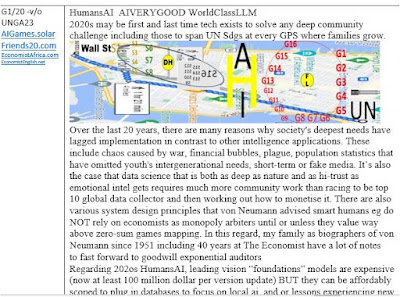
Saturday, March 6, 2021

 https://www.mcleodgroup.ca/2019/12/sir-fazle-hasan-abed-master-builder/

Sir Fazle Hasan Abed: Master Builder

Sir Fazle Hasan Abed: Master Builder

By Ian Smillie, December 30, 2019

Several members of the McLeod Group had the privilege of knowing and working with Sir Fazle Hasan Abed, the founder of BRAC, one of the world’s top NGOs (see our recent blog). He passed away on December 20, and we wanted to share an appreciation of him with our readers. His biography can be found on the BRAC website. We offer our sincere condolences to his family, to BRAC, and to all those whose lives were touched by him.   

It is impossible to overestimate the importance of BRAC in the global effort to end poverty. It is equally difficult to separate its success from the life and work of the man who created and steered it through almost five decades, Sir Fazle Hasan Abed – “Abed bhai” to his colleagues, “Abed” to his friends.

BRAC’s size and reach are – by any measure – staggering. Its microfinance lending, mostly to poor rural women, exceeds $1 billion a year. Although BRAC is a leader in the field of microfinance – touted for a few years as the miracle remedy for poverty – Abed never saw it as a cure-all. In his mind, the key to ending poverty was new, productive enterprise. Poor people, especially women and especially in rural areas, had to make things. And to do that, they had to be better linked to resources – seeds, fertilizer, knowledge, finance – and to markets. BRAC’s social enterprises in dairy, poultry, silk, handicrafts, seed multiplication, and a dozen other areas, have created hundreds of thousands of livelihoods, and in time they generated income that has made BRAC largely self-financing. Microfinance was the fuel in the tank, but the engine was always innovative, productive enterprise.

The BRAC Bank, completely separate from the microfinance operations, holds deposits of more than $2 billion and has a Moody’s long-term credit rating as good as that of Barclays Bank. Facts like these might catch the eye of a banker. But BRAC was and remains an NGO with its primary focus on social development, ranked for the past four years by the Geneva-based NGO Advisor as Number 1 on a list of 500 global non-profits.

BRAC pioneered non-formal primary education, mostly for girls, aiming to give literacy, dignity and hope to the next generation of mothers. Its groundbreaking oral rehydration training programs in the 1970s reached nine out of ten rural households in Bangladesh. That, along with innovative health, nutrition and sanitation programs, contributed to a seven-fold reduction in the country’s child mortality. Fewer child deaths, better education and more economic opportunity, especially for women, led to a three-fold drop in the fertility rate, ending worries about unchecked population growth.

There’s hardly an area of human development that BRAC hasn’t touched in a meaningful way, taking some of its best lessons to Africa and other parts of Asia. Fazle Hasan Abed did not accomplish this all on his own. But he was able to find and motivate others – individuals, government departments, donor agencies and some of the world’s most powerful and influential policy makers. His ambition was boundless, but it rested on a quiet charisma that inspired devotion and made mountains seem scalable. He listened far more than he spoke.

I first met Abed in 1973, when BRAC was just a handful of people working out of a flat in Motijheel. It was an unlikely, almost accidental enterprise, created by a man whose life until then couldn’t possibly have suggested what was to come. He had lived comfortably for several years in London, and then worked as a senior Shell Oil accountant in Chittagong. There, he took time off to spearhead relief efforts following the 1970 cyclone and the 1971 War of Independence.

Discovering the deeply entrenched poverty he had failed to notice during his privileged youth, he created what he thought would be a small, time-bound demonstration effort to show what might be accomplished with a few farming cooperatives, adult literacy and health training. A lesser man would have run from the resulting failures, but for Abed, they were lessons to be remembered and applied to the much bigger voyage on which he then embarked.

When I was completing research in 2009 for a book about BRAC, Freedom from Want, and trying to think about what had made it so successful, outsiders frequently told me it was Abed’s experience with the private sector. I always doubted that. Shell perhaps gave him useful perspectives on money and management, but it could not have been the source of his ingenuity, his compassion and sense of injustice, his willingness to take risks and his insistence on learning what works, what does not, and why. He told me that a lot of it was luck, and laughed, quoting Napoleon: “Give me lucky generals.”

I investigated the concept of luck and found a good summary: “Being ready for the opportunity.” Abed was always able, better than most, to see and understand opportunity. By that definition, “luck” may well have played a part.

He suggested I talk with an employee who had recently returned from doctoral studies in Britain – she might have a helpful perspective on BRAC’s success. She said she had expected to find a saint or a genius around every corner, but in the end, that wasn’t the case. The answer was “common sense” – everything BRAC has achieved came about, she said, through the application of common sense. I put that in the book, but in truth Abed did have the versatility of genius, a talent for applying common sense in a world where the concept is largely unknown and an ability to unlock doors long closed to innovation, justice and human development.

Abed never rested on well-deserved laurels; he always argued that “big” is essential in confronting poverty. Most ambitious people, however, leave a trail of wreckage and animosity behind them. With Abed, it was quite the opposite, and that too must be part of BRAC’s success – his unflappability in the face of tremendous odds and personal tragedy, his ability to build and to bring diverse people and resources together in common cause.

Sir Christopher Wren, visiting the construction site for St. Paul’s Cathedral, is said to have asked a stonemason what he was doing. “I’m cutting stone,” the man said. Further along, Wren asked another stonemason what he was doing. He replied, “I’m building a cathedral.” Abed was both Christopher Wren and the stonemason, and while BRAC in it many manifestations will continue to thrive, the legacy will always be his: Abed, Master Builder.

Ian Smillie is a development professional and foreign aid critic.

Monday, March 1, 2021


Monday, February 15, 2021

goal bending the arc towards women economic potential - from bangla daily star march 2021

Bending the arc of development towards gender equality

A tribute to Sir Fazle Hasan Abed

"BRAC's approach has been to put power in the hands of the poor, especially poor women and girls," said Sir Fazle Hasan Abed. 

We were sitting in his office on the 19th floor of the BRAC Headquarters in Dhaka. Abed Bhai was describing BRAC's pioneering work with women and girls. Although I had heard him recount these anecdotes many times and had also seen some of the programmes on the ground, it was always inspiring to listen to him.

Twelve million mothers learned to make oral rehydration therapy so that children would no longer die from diarrhoea. Thousands of rural women became poultry micro-entrepreneurs, rearing and vaccinating chickens and spurring the growth of a new sector in the rural economy. Hundreds of thousands of housewives trained as para-professional teachers and even larger numbers as community health workers so that elementary education and primary healthcare could be available in every village. Millions of women pulled themselves and their families out of poverty with BRAC's support, improving their lives materially and also gaining voice and respect in their households and communities.

As dusk fell over the slums and rooftops of Dhaka that evening, Abed Bhai turned from talking about what BRAC had achieved for women and girls in Bangladesh to what still remains to be done elsewhere, about where and how it must scale up, innovate, break barriers and set new records. His plans were as audacious as ever, his energy seemingly abundant. But we both knew time was running out for him and the baton must pass on to others. When we next met a few months later, it was to say goodbye as he lay in bed, his eyes closed. Weeks later, on December 20, 2019, Sir Fazle Hasan Abed passed away.   

Of all the remarkable contributions for which Abed Bhai is remembered today, I believe none has been more ambitious in scale, nor more impactful in consequence, than his work to empower women and girls. His ground-breaking approaches to development turned perceived wisdom on its head and transformed the lives of millions of women and girls in Bangladesh and beyond.

"Small is beautiful but big is necessary," he said frequently—and with good reason. Scale matters if you want to end poverty, and there is so much of it, especially among women.

He often spoke of poor women as the best managers he had ever seen because with little income or assets, they fed the family, looked after the children and ran their households. "If poor women can manage poverty well, why should they not manage development?" he would say, packing in that one statement tomes of wisdom about women's agency.

Watching women toil in the villages and small towns of Bangladesh, he saw in their thrift, ingenuity and resilience the promising talent of would-be entrepreneurs. Women became the key resource as well as the subject of BRAC's poverty eradication strategies.

With astute business sense, Abed Bhai invested heavily in women and girls through education, health, legal services and microfinance programmes, income generation opportunities, community development and social mobilisation. BRAC's approach of working directly with communities to develop solutions and of testing, monitoring and modifying programmes constantly to make them more responsive gave new meaning to women's empowerment.

Women's agency was explicit in what is one of BRAC's—and Bangladesh's—great success stories: the Oral Rehydration Therapy (ORT) programme. Over a decade, starting from 1979, BRAC visited around 11.8 million homes, covering 98 percent of the total rural households, to teach at least one woman in each household to make oral rehydration therapy with a three-finger pinch of salt, a handful of gur (molasses) and half a litre of boiled water. With no particular skills needed, ingredients available in every home and a simple technique for measuring, mothers produced oral rehydration solutions to treat diarrhoea and reduce infant mortality. Today, Bangladesh has one of the lowest death rates from diarrhoea and one of the highest user rates for ORT in Asia.

In the early 1980s, BRAC created income generation opportunities for women in poultry rearing and trained women to vaccinate chickens for a fee. The government provided free vaccines but there was no cold chain to carry the vaccines from the office of the sub-district livestock officer to the villages. So, BRAC devised a simple system by which the vaccines were packed inside ripe bananas to preserve the temperature and provide protection against damage during transport.

These are just a few examples of Abed Bhai's down-to-earth approach to development and his relentless drive for scaling up. He was thrifty, creative and persevering, just like the poor women he admired so much. Today, frugal innovation on scale is a badge that BRAC wears with great pride.

With his characteristic audacity, Abed Bhai carried BRAC's development models to other geographies. From adolescent girls in BRAC's schools in Helmand, Afghanistan to the BRAC community health micro-entrepreneurs in small towns in Uganda, thousands of woman and girls broke barriers to take control of their own destiny. 

One of BRAC's most transformative programmes is the Ultra Poor Graduation initiative, which focuses on the poorest and most marginalised families, usually women-headed households, who are unable to afford even one full meal a day, live on the fringes of society and are caught in the inter-generational trap of extreme poverty. For two years, the women are given an income generating "asset" (such as a cow or chickens), a stipend, healthcare, and education for their children, alongside training and counselling to build their financial capabilities, a sense of self-worth and become integrated into the community. Results show that over 95 percent of the almost 1.5 million women and their families benefitting from this programme have "graduated" out of ultra-poverty, and even more remarkably, have continued to improve their lives. Many have become successful microfinance savers and borrowers.

As always, Abed Bhai was keen to scale up and readily shared BRAC's experiences with others. Today, the Ultra Poor Graduation Initiative is being replicated in 45 countries with impressive results.

Abed Bhai knew that development cannot be sustained if it does not change the social and cultural norms that hold back the progress of women and girls, but to be successful, the change itself must take into account the cultural context of the community. So, to make girls' education culturally acceptable to tradition-bound families and communities in Afghanistan, BRAC trained thousands of female teachers and engaged hundreds of older women to chaperone the girls from home to school and back. In Bangladesh, where the social context is different, popular theatre and public campaigns are used to transmit messages on gender equality, women's groups are mobilised at the village level to advocate for social change and thousands of paralegals are trained to resolve family disputes in ways that respect women's human rights.

Whether in Afghanistan, Bangladesh or many other countries, the major barrier to women's empowerment and gender equality remains patriarchal values. "Patriarchy is an enemy to both men and women," Abed Bhai declared on International Women's Day in 2018, acknowledging that gender equality was his "unfinished agenda".

Ultimately, the poor woman's struggle is not only a struggle to increase material assets but a struggle for equality, justice and dignity. Much remains to be done to make the world a safer, more equal place for women and girls. The pandemic has made that task harder, and also more urgent and vital. But when I think back to that evening in Abed Bhai's office and how he not only made the impossible possible but also sustainable and scalable, I feel optimistic. The arc of development is long but it bends towards gender equality.


Irene Khan is an international thought leader and advocate on human rights, gender and social justice issues. She is a member of BRAC International governing body.